
Are Video Game Players Safer Drivers?
Last Updated on December 4, 2025
It’s long been assumed that becoming a safer driver primarily requires time behind the wheel and accumulated experience. Many argue that cautious, mature drivers — like women over age 30 — are among the safest on the road. But recent research suggests there may be another (surprising) way to boost your driving instincts: playing action video games.
Although video games have historically faced criticism for promoting inactivity or even aggression, emerging studies show that certain types of video games may sharpen your decision-making, reaction time, and situational awareness. That raises the question: Could gamers make better (or at least safer) drivers?
Key Takeaways
- Action video games can improve reaction time, situational awareness, and decision-making — skills useful for safe driving.
- Some studies show gamers perform slightly better in driving simulations, especially with hazard detection and lane control.
- Video games can’t replace real driving experience or safe driving habits.
- Better driving habits and fewer accidents can lead to lower auto insurance premiums over time.
Evidence from Cognitive Science: Video Games Train the Brain
A landmark study from the University of Rochester found that playing fast-paced action games helps players become “better learners.” In their experiment, participants who played action games for 50 hours significantly improved at visual-perceptual tasks compared with those who played slower, non-action games. The action-game players’ brains formed stronger internal “templates” to anticipate and respond to new information — and they did so more quickly.
Subsequent research has confirmed that action video games can improve reaction time, sensorimotor coordination, visual-spatial awareness, and multitasking abilities. A 2021 study reported that action game training improved both perception and working memory, and helped players learn new tasks more quickly.
Does That Translate to Driving Skills?
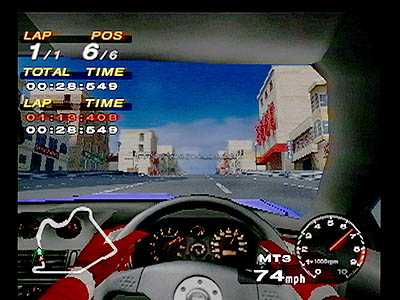
Because driving safely requires rapid perception, quick decision-making, and steady coordination under changing conditions, these gaming-related cognitive benefits appear promising. In fact, a recent study showed that people with experience playing action video games performed better in a driving simulation: they maintained steadier speed, stayed in their lane more consistently, and reacted more effectively to unexpected events.
However, research on gaming and real-world driving performance remains mixed. Some studies find only modest advantages for “high gamers” compared to non-gamers, especially in short simulator drives. And experts point out that even the most advanced video games cannot fully replicate real-world driving challenges such as unpredictable traffic patterns, road conditions, or complex social cues from other drivers.
What This Means for You (and Your Driving)
So, are video game players safer drivers? The answer: potentially — but with limits.
- Action video games can strengthen visual awareness, reaction time, and decision-making — all skills that can benefit drivers.
- Gamers may have an edge in simulation environments, especially in lane keeping and hazard detection.
- Video games are not a substitute for real-world driving experience, practice, and safe driving habits.
- Gaming may offer a small advantage, but attentive, defensive driving ultimately matters far more.
How Being a Safer Driver Affects Your Auto Insurance
When searching for auto insurance, you can’t list “video game experience” as a factor that makes you a safer driver. However, if gaming helps you react faster and make better decisions during unexpected situations, you may reduce your chances of being involved in an accident over time.
Since insurance companies focus heavily on your driving history when determining rates, maintaining a clean record can lead to lower premiums. If action gaming gives you even a slight edge in avoiding collisions, it may indirectly help keep your insurance costs down.

Leave a Reply